


Blue wave
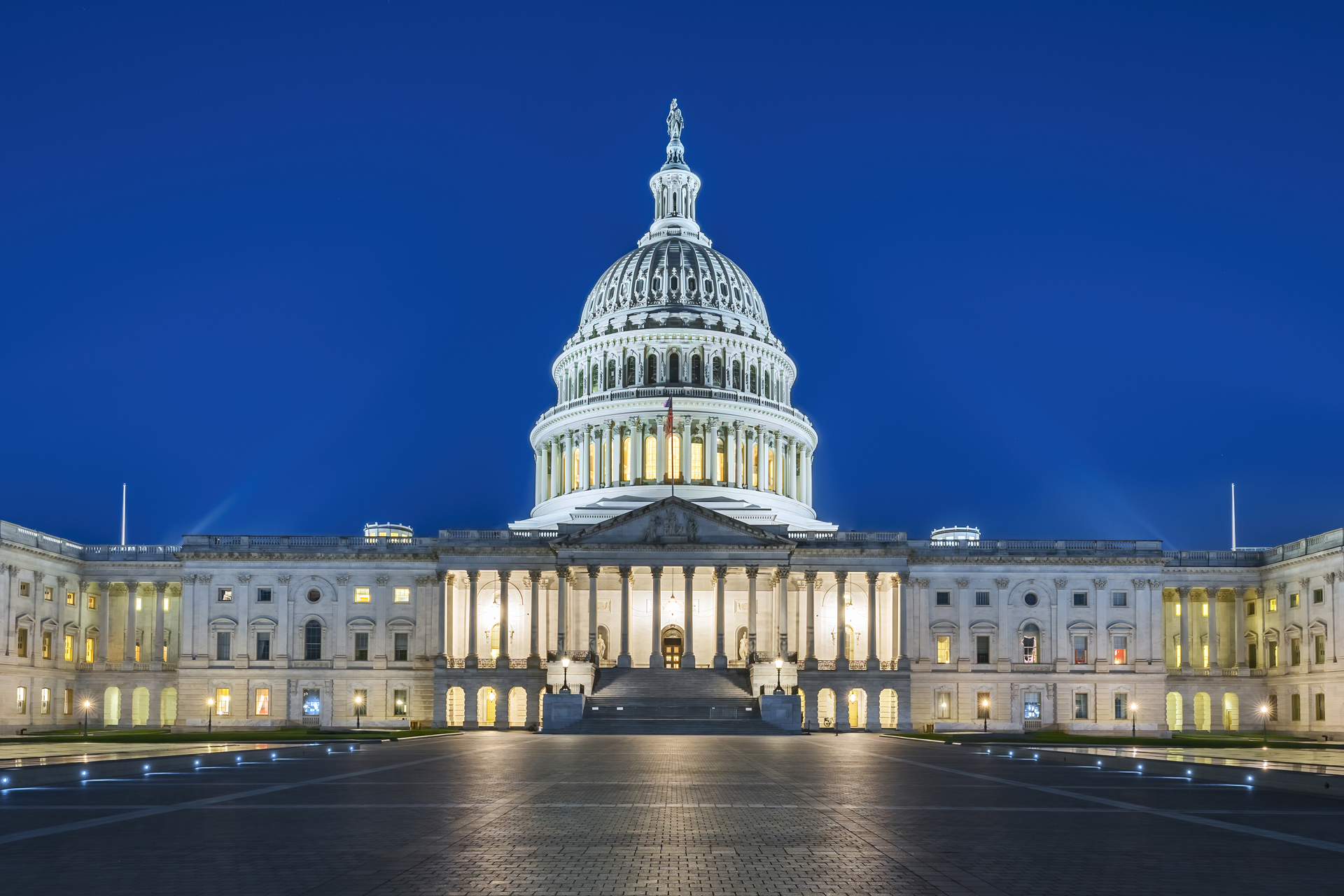
In the US, midterm elections ended with a blue wave. The Democratic party have won both the House and the Senate, with 253 and 54 seats respectively. The majority is comfortable in both chambers, but it still falls short of the threshold required to override a presidential veto, meaning legislation will need to be negotiated with the executive. The Democrats were able to flip states traditionally heavily Republican, such as Texas and Kansas, marking a big political defeat for President Trump. In terms of policy, we don’t expect significant changes because AI regulation is mostly determined at the state level, and the Democrats are unlikely to push for fiscal consolidation.
Key decisions approaching
The midterm result means important decisions are approaching on Iran. The new Congress will take office in January, meaning President Trump has two months to carry out any escalation. A similar situation exists in Israel, where Netanyahu is the interim Prime Minister but is unlikely to remain part of the governing majority, pointing in the same direction. The case for a sudden escalation is not clear-cut. On one hand, the current status quo is untenable and conditions imposed by Tehran for a deal are too restrictive for the US. On the other hand, midterms can be seen as a referendum on war, and the result was clear. High ranking members of the Republican party, such as JD Vance and Ted Cruz, are openly criticising the war.
Capitulation day
Equity market turned very volatile right after midterms, with the Nasdaq index registering one of its worst daily performances last Thursday. The index was down 7% on the day, with semiconductors down almost 10%. Other traditionally volatile areas of risk markets, such as high yield credit and bank stocks, were flat on the day, pointing to a technical adjustment rather than a broad-based risk-off move. A rise in Democrats influence is increasing the risk of AI-unfriendly regulation, weighing on some of the best-performing trades of 2026. As a result, highly leveraged hedge funds and retail investors sold at the same time. While the adjustment underscores the extend of long positioning in the segment, it can be read as an alarm bell for broader risk markets, especially given that growth and earnings projections remain very high. The recent debacle in distressed credit points in the same direction. We remain cautious on risk assets.
Waiting for CPI
In the US, the key data point this week is October CPI. The core component is expected to print at 0.2% m/m. October labour market data, published last Friday, was strong, with 165k jobs created compared with 70k expected. We expect a Fed hike in December, followed by a potential pause thereafter. Chances of another hike by year-end fell this week to 80% due to weakness in equity markets.
Algebris Investments’ Global Credit Team
For more information about Algebris and its products, or to be added to our distribution lists, please contact Investor Relations at algebrisIR@algebris.com. Visit Algebris Insights for past commentaries.
Any opinion expressed is that of Algebris, is not a statement of fact, is subject to change and does not constitute investment advice.
No reliance may be placed for any purpose on the information and opinions contained in this document or their accuracy or completeness. No representation, warranty or undertaking, express or implied, is given as to the accuracy or completeness of the information or opinions contained in this document by any of Algebris Investments, its members, employees or affiliates and no liability is accepted by such persons for the accuracy or completeness of any such information or opinions.
© Algebris Investments. Algebris Investments is the trading name for the Algebris Group.
