
Over the past five years, US nominal GDP has grown at 7% per year. Over the same period, five-year Treasuries yielded less than 4% on average. As government debts become increasingly unsustainable, keeping interest rates below fair value is the only viable option. The effect so far has been an exodus from long-dated bonds, steeper yield curves and inflation in risk assets.
Over the course of 2026, financial repression has given way to investor rebellion. The sell-off in global bonds has accelerated, with risk premia driving the move (Chart 1). Markets are more sensitive to government policy, with a dovish central bank tone and looser fiscal policy both translating into steeper curves. Rates volatility is back, as opposed to 2025, when rates increased in a straight line. Bond investors are facing long-term losses for the first time in a century (Chart 2).
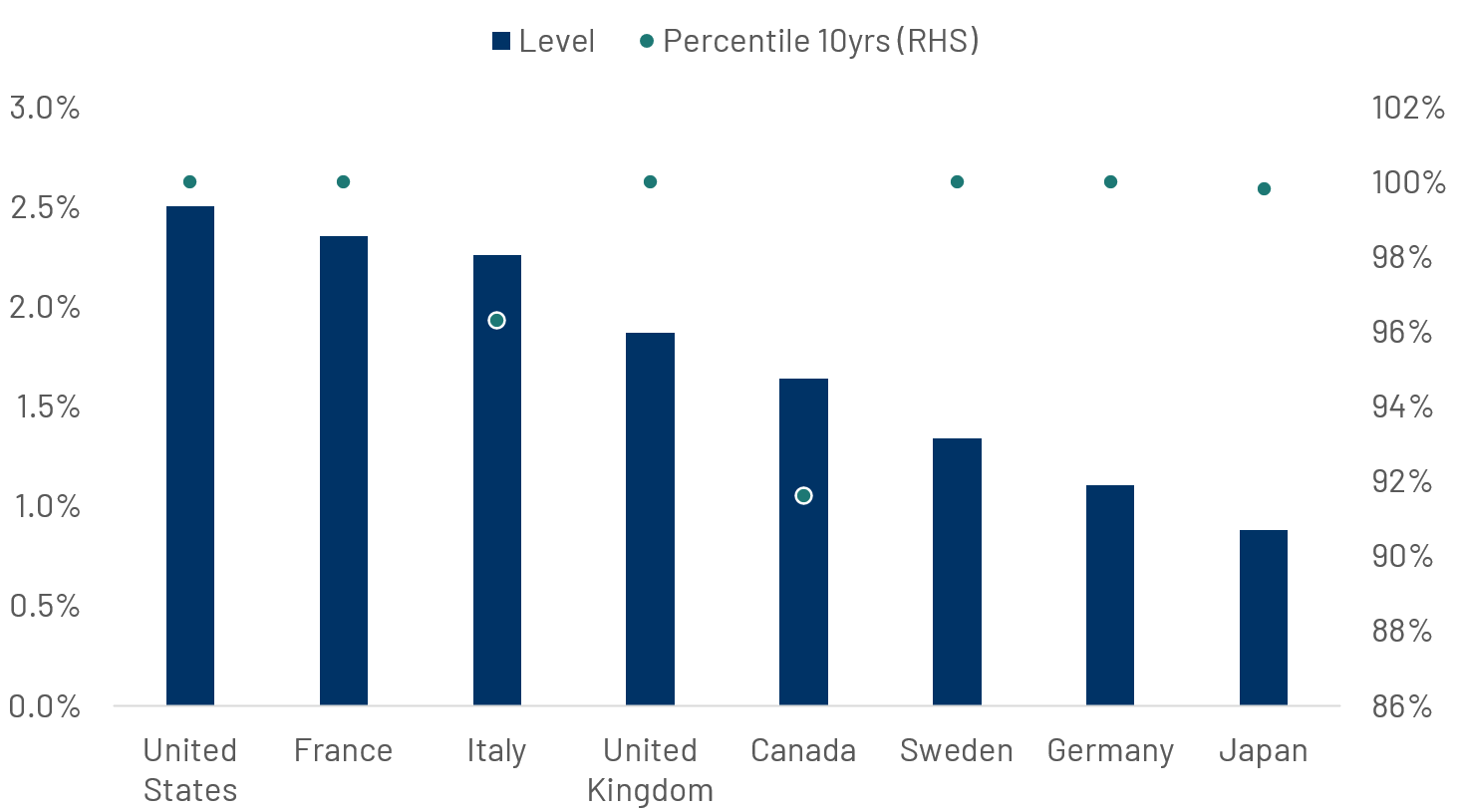
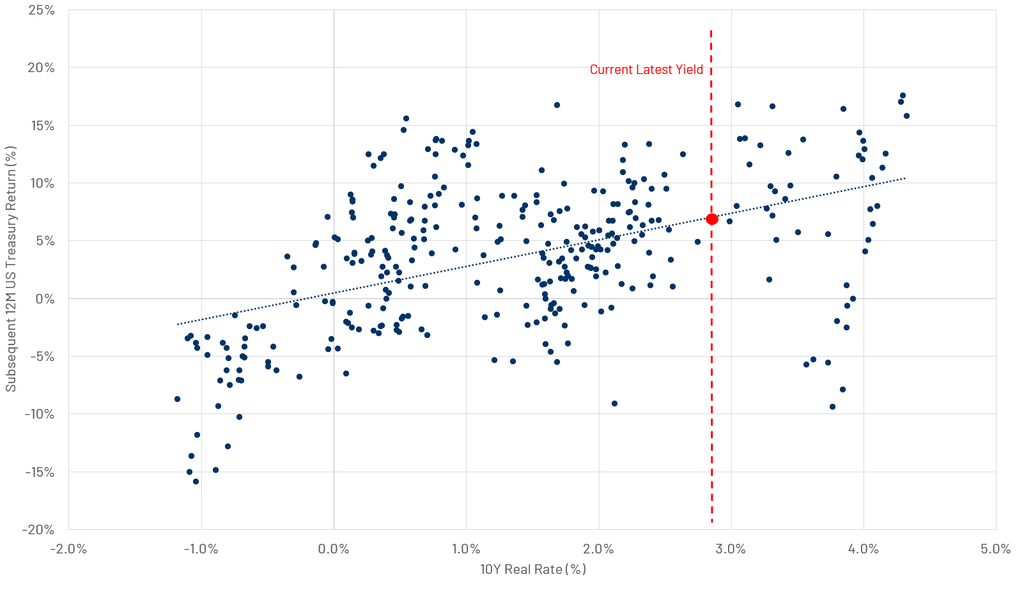
Note: Real rate of 10 year inflation-linked bonds. Source: Algebris Investments, Bloomberg Finance L.P., data as of
10/09/2026.
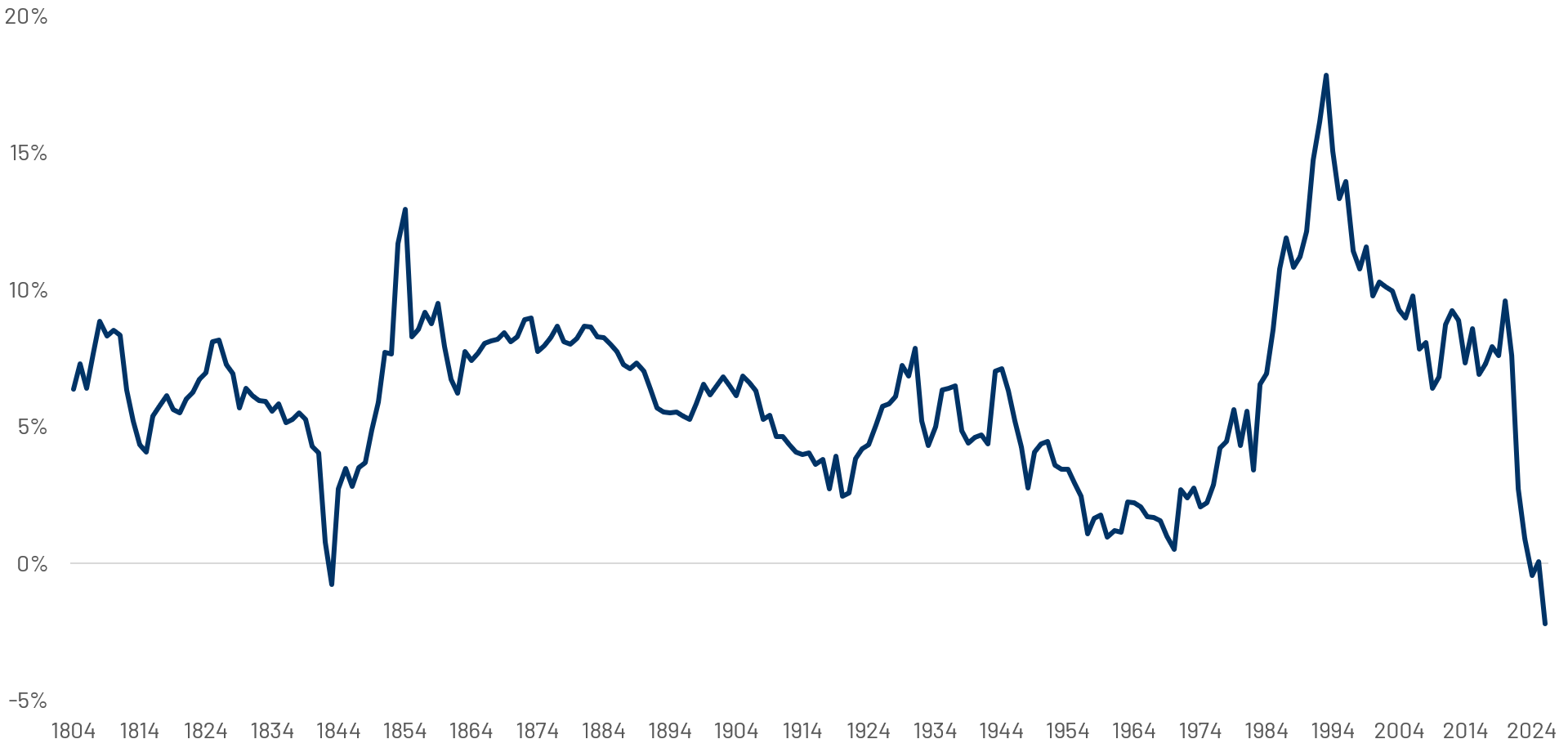
GNote: Rolling 10-year annualized US bond total returns since 1793. Source: Bloomberg Finance L.P., Algebris Investments Edward F. McQuarrie, Santa Clara University. Data as of 10/09/2026
The Duration Glass Turns Half Full
As repression has become rebellion, the duration glass is turning half full. Further bond losses become harder for investors to stomach and can trigger risk asset redemptions. Equity weakness was a key rebalancing factor for the bond market in 2022 and 2023. Rising mortgage rates will hurt consumers globally, softening the macro outlook. Capital devoted to shorting government bonds is at three-year highs (Chart 3), while fixed income allocation in US retail portfolios is at multi-decade lows.
Risks for rates abound. The good news is that they are becoming consensus. Trump economic adviser Kevin Hassett states that real yields should reflect 4% productivity growth. Fiscal fears pervade the popular and specialised press (Chart 4). A good share of these problems is thus reflected in valuations. Historically, current levels of long-end real yields have been followed by returns close to 6% (Chart 5). High interest rates also offer investors asymmetry. Starting from current levels, a 12-month tightening of 1% in 10-year Treasuries leads to a 13% gain, compared with a 2% loss for a 1% widening.
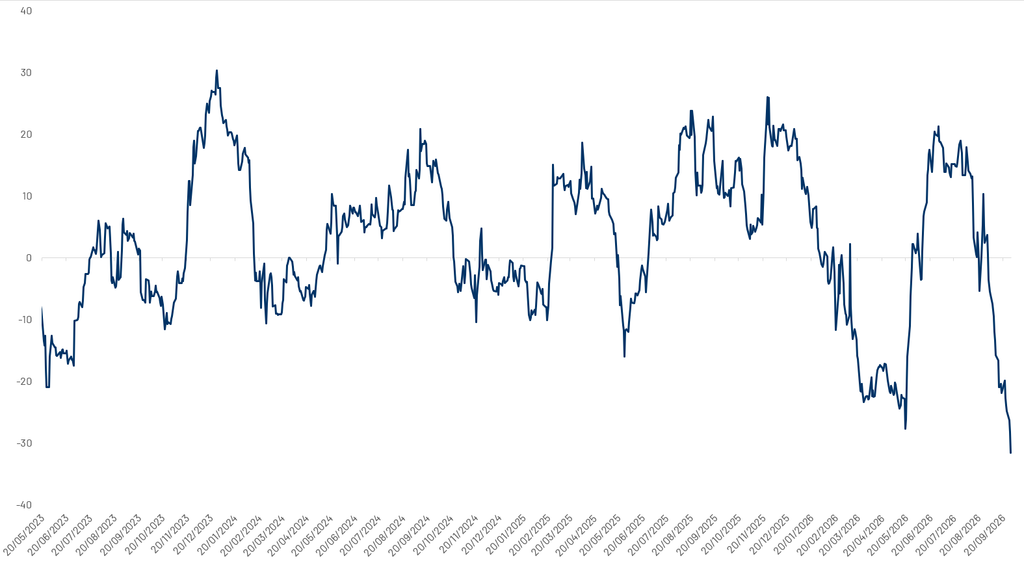
Chart 3 | Bond shorts at five-year highs
Note: Open interest in long US bond futures. Negative read means short interest. Expressed in Mln US$ DV01. Source: Citibank, Bloomberg. Data as of 30/09/2026
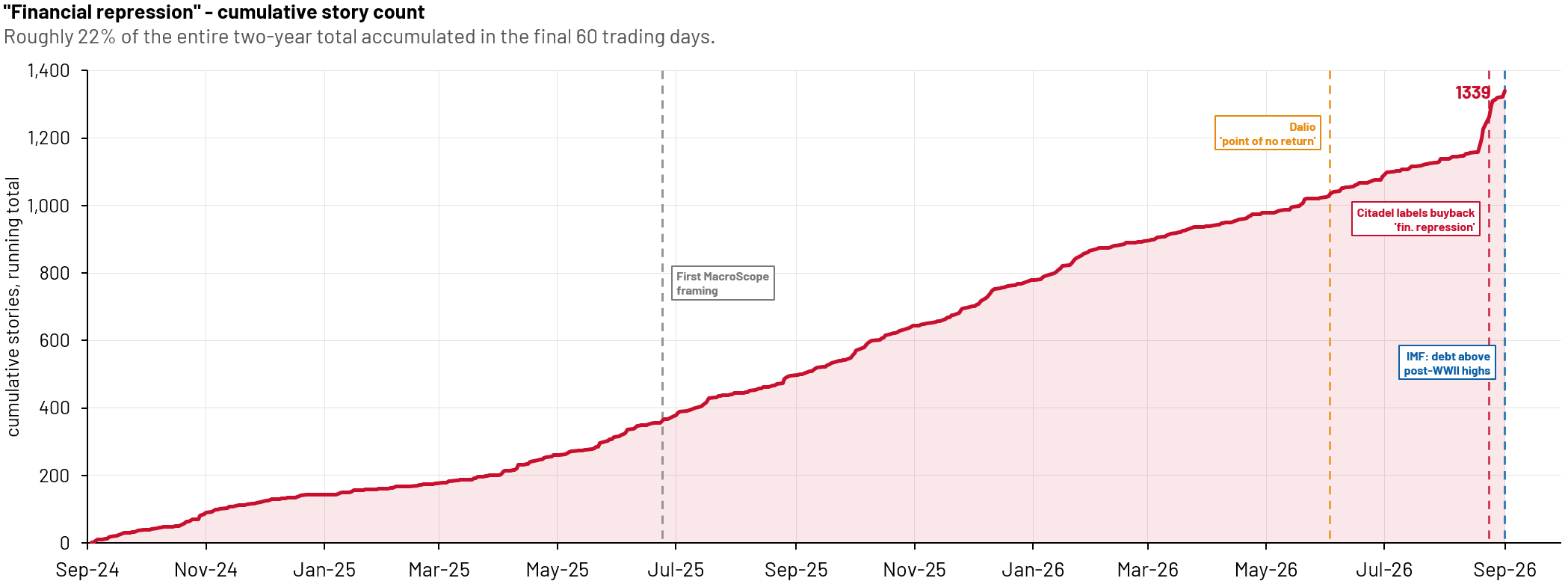
Note: Bloomberg cumulative daily story counts over 500 trading days. Source: Bloomberg, Algebris Investments, data as of 01/09/2026
Note: Bloomberg cumulative daily story counts over 500 trading days. Source: Bloomberg, Algebris Investments, data as of 01/09/2026
Central Banks Start to Respond
Market pressure is triggering some positive effects too. Central banks are behind the curve but have started hiking. Over time, higher front-end rates are likely to restore credibility. US inflation has stayed above target for the longest period in recent history (Chart 6), and long-end bonds have deviated from policy rates as a result (Chart 7). As the global hiking cycle gains momentum, support for long bonds is likely to increase. Inflation breakevens have remained steady over the past few months, suggesting that any normalisation in commodity prices is likely to compress real yields.
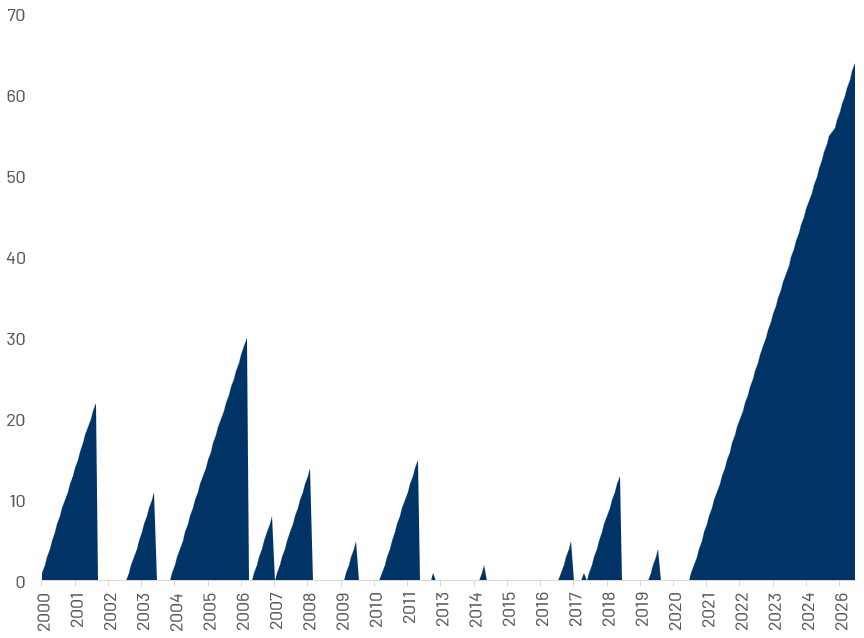
Note: the graph shows the consecutive number of months of US CPI being above the 2% target. Source: Bloomberg Finance LP, Algebris Investments. Data as of 31/8/2026
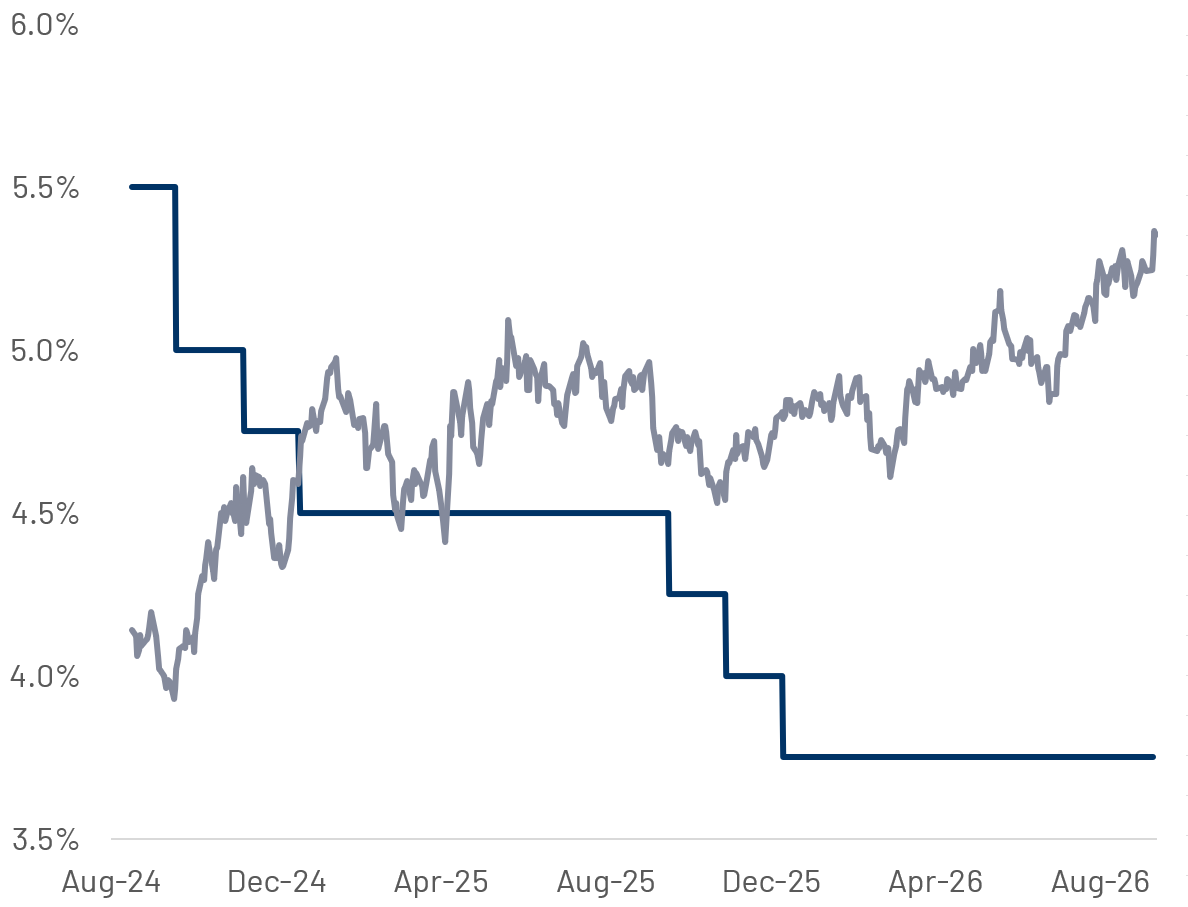
Source: Algebris Investments, Bloomberg Finance L.P. Data as of 10.09.2026.
The Upside Risk to Yields is Fiscal
One risk to global rates relates to growth. If the AI boom is real, productivity and returns on capital can sustain higher rates for longer. The outlook for technological developments is hard to call, but tech valuations already imply 15% earnings growth. Historically, the gap between capex and GDP growth has been mean-reverting, and 2026 will mark the five-year high. With AI investment accounting for 20–50% of US growth in 2025, forecasts can move quickly. US rate-sensitive consumption and investment remain substantial despite the rise of AI.
A regime change from a hawkish to a dovish narrative does not take long to materialise. As recently as September 2025, markets were pricing five Fed cuts for 2026. Reality turned out quite differently. With Fed pricing having recently turned strongly hawkish, and risk assets starting to feel the impact, the balance of risks is turning towards owning longs in rates.
The more worrying angle remains the fiscal story. Interest expenses are weighing on an increasing share of deficits (Chart 8), making debt harder to stabilise. The cost of refinancing US debt has doubled in 2025 alone. Historically, levels of US debt close to current levels have preceded a sustained increase in the long-term cost of debt. The US administration is acknowledging the problem, through buybacks and verbal intervention, but more political cohesion is needed for a proper fix. The global trend points in the same direction, at least in G10 markets.
Painful moves in interest rates and widening real yields mean some long-term value is being created. We see value in belly and long-dated tenors of selected yield curves, e.g. US and Germany. The front-end is sensitive to the repricing of hikes but a high starting point means bonds with 4-5 years duration only lose 30% of carry for every 50bp of re-pricing. The long-end can even benefit, as central banks re-gain credibility.
Value in yields translate into value of rates-sensitive assets, such as investment grade credit. A 6% yield on US investment grade credit belongs to the right tail of the historical distribution and has been followed by one-year returns in the 3–13% range. Within IG credit, spreads appear elevated relative to fundamentals, creating opportunities in long-dated senior bank debt, selected hyperscalers and high-quality hard- and local-currency emerging-market debt.
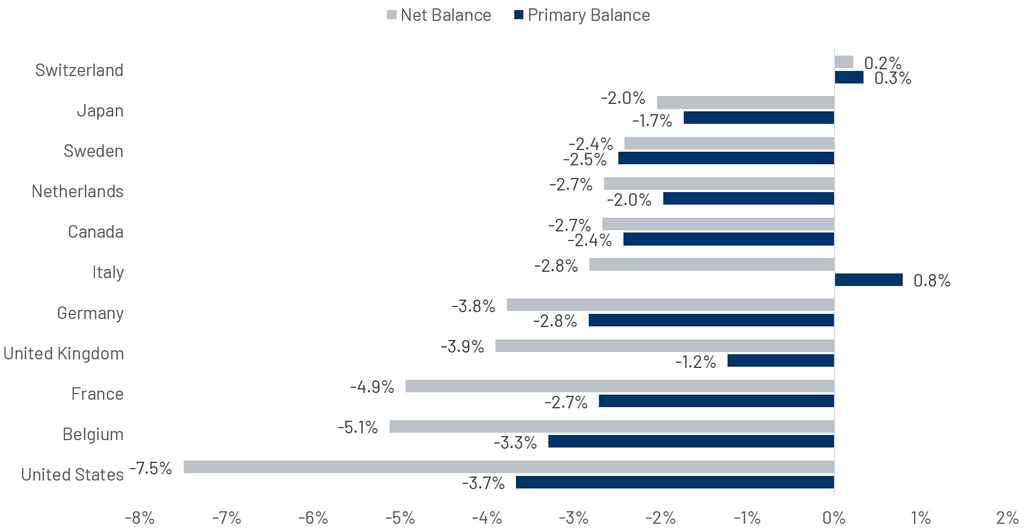
Source: IMF Fiscal Monitor 2026, Algebris Investments. Data as of 31/08/2026.
Value in Duration, Caution in Credit Risk
Credit spreads are less attractive. Losses in fixed income have been driven by rates, with spreads below the 10th percentile of the historical distribution in high yield markets. The road to rates normalisation goes through economic softness, which does not bode well for credit risk. The recent increase in rates volatility provides a catalyst for wider credit spreads. We maintain a cautious approach to higher-yielding credit, keeping exposure low and limiting it to well-anchored issuers. We favour defensive sectors, such as financials and telecoms, and avoid cyclical areas, emerging market high yield credit and European periphery spreads, including Italy.
For more information about Algebris and its products, or to be added to our distribution lists, please contact Investor Relations at algebrisIR@algebris.com. Visit Algebris Insights for past commentaries.
Any opinion expressed is that of Algebris, is not a statement of fact, is subject to change and does not constitute investment advice.
No reliance may be placed for any purpose on the information and opinions contained in this document or their accuracy or completeness. No representation, warranty or undertaking, express or implied, is given as to the accuracy or completeness of the information or opinions contained in this document by any of Algebris Investments, its members, employees or affiliates and no liability is accepted by such persons for the accuracy or completeness of any such information or opinions.
© Algebris Investments. Algebris Investments is the trading name for the Algebris Group.